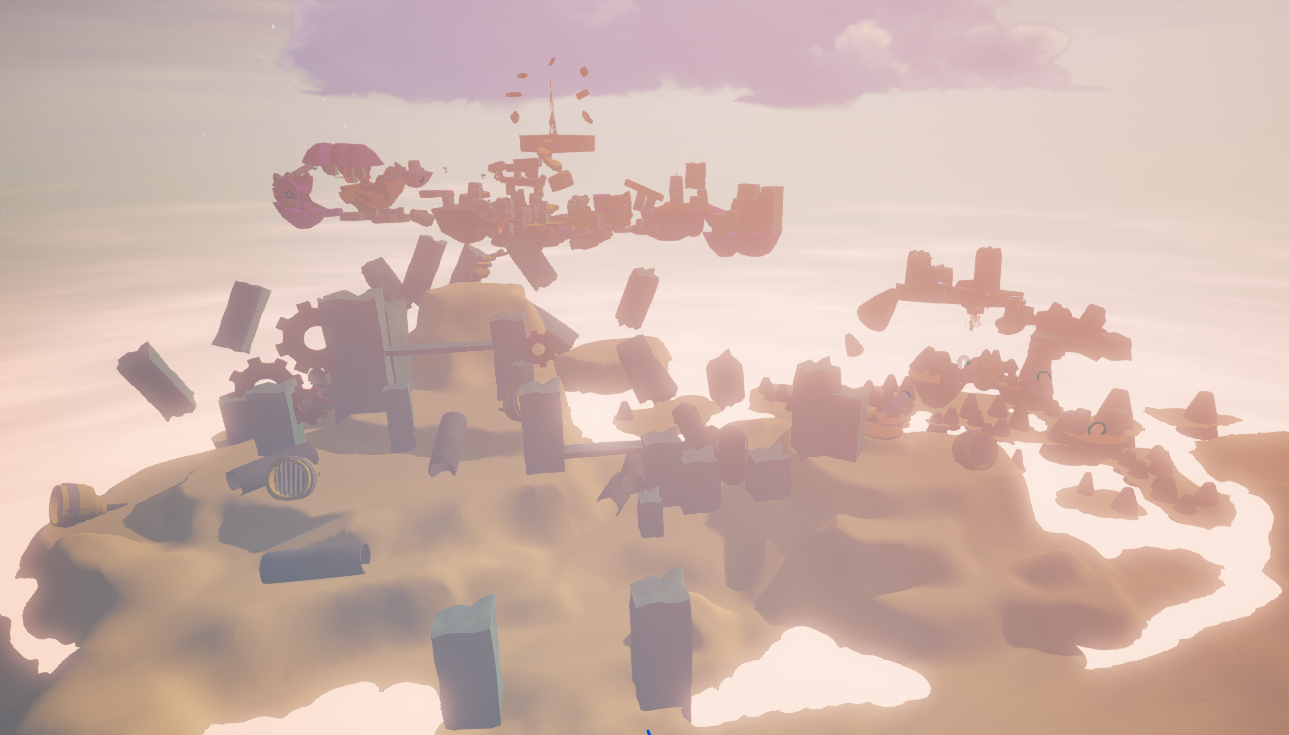
Everent (Wip)
Studio Kismet \ Unreal Engine
Everent is a speed-platformer set in the skies of a strange civilization called Stratos. Take the role of Ollie, as they explore these strange islands in the sky and liberate the people being help captive by a strange and ancient entity.
Responsibilities:
Developed a game from vertical slice through post-production within an eight-month timeline.
Worked within a group of eighteen team members consisting of artists, programmers and other designers.
Used Jira to track my hours and tasks for each sprint.
Used Perforce to allow access to the project files, record changes and contribute to the project.
Conducted player controller experimentation to help polish the mechanics and player movement.
Created action blocks to test level design ideas, “finding the fun”.
Wrote multiple LDDs to formulate and plan my ideas for my levels using PowerPoint.
Created a flow chart using Miro to conceptualize how my level will progress.
Designed multiple maps using Adobe Illustrator to combine all the concepts together.
Utilized various modeling tools to create block outs.
Performed playtests and iterated upon the levels based on feedback.
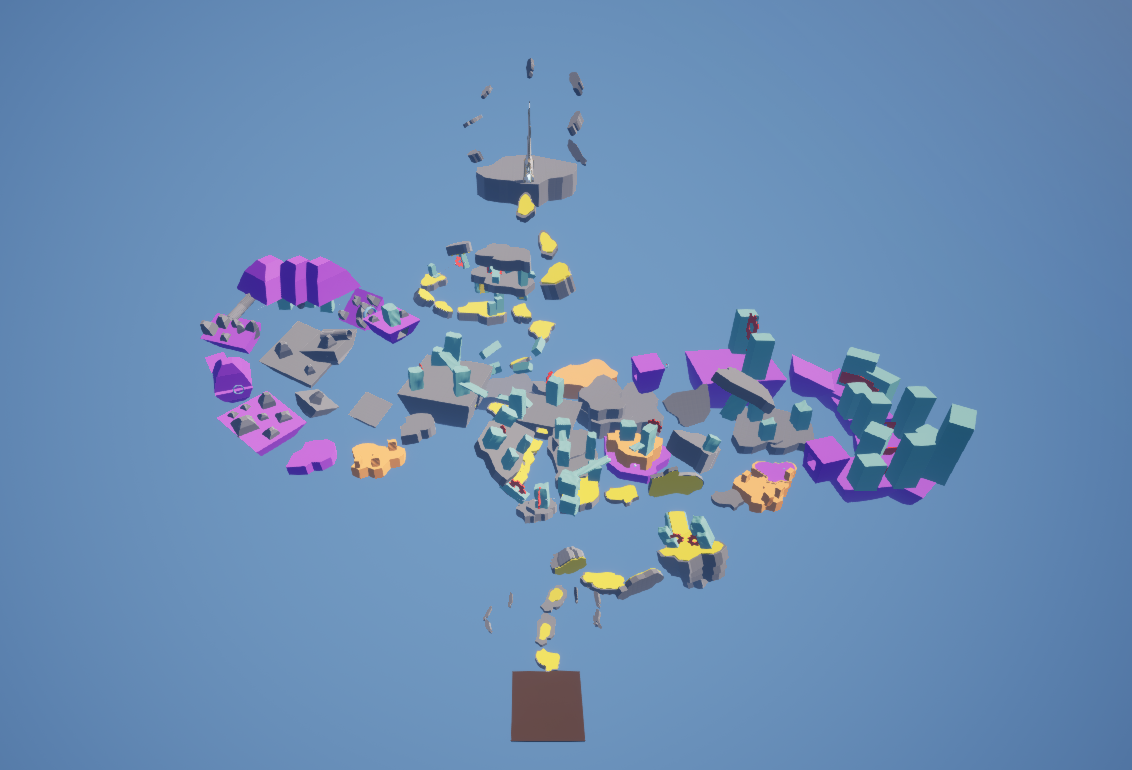
Vertical slice blockout
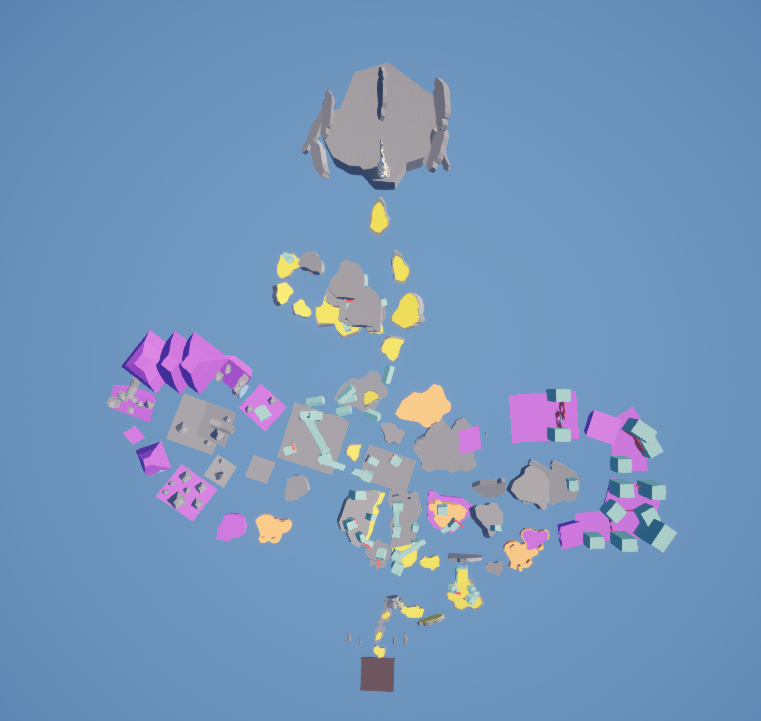
Post vertical slice blockout
PRE-PRODUCTION
My team was assigned four months to create a vertical slice of our game concept. I was tasked with testing and playtesting the player controller and mechanics.
Player controller experimentation
To assist the programmers with implementing and designing the player mechanics to a consistent, comfortable state, I was tasked with creating playable areas in a level to test the player mechanics and movement.


PLANNING
When the player controller was in a stable and comfortable state, I was then assigned my level for Vertical Slice, Ventis. I created a level design document using PowerPoint to plan and organize my ideas for the level. This document included sections outlining the narrative, design focus, and summaries of key locations and features within the level.
References
The environment of Ventis was planned to be a rocky, barren, dying junkyard. So I searched for reference images that gave the atmosphere the team was looking for.


Miro board
I created a diagram using Miro to plan the flow and structure of the level. Since the level would be designed as an open world I focused on the flow of the critical path.
2d map
The 2D map combined the gameplay, and location features of the level into a single visual plan. Although i knew the map was not final, and could potentially be drastically changed past vertical slice, i knew it was a good starting point for understanding how the level would come together.
The first area of the island was designed as a liner experience to introduce the player to mechanics and the story, as the second area is more open world for the practice their skills and discover more about the world around them.

Processed and features
I utilized the Cube Grid modeling tool and BSPs to allowed me to create structures throughout ventis. I also used basic modeling shapes to create rocks, and junk laying around the environment to create a barren, deserted atmosphere.


Area 1

Area 2
The landscape tool was use to create a natural rocky environment.

Area 1
Area 2
Action Blockouts
While developing the main blockout, I crafted a variety of action blockouts to “find the fun”. This allowed me to generate some parkour ideas for the open world, understand what was enjoyable for the movement and playtest the controls and board mechanics.

First iteration
For a first playable section in area 1, it started off very empty. The environment played not as exciting and fun as intended. Upon final iteration, I added more junk, rocks, and pipes to the environment for the player to parkour off and around adding more for the player to do making the experience more enticing.

First iteration


Iterations
Initially I designed the area one factory as more stable and intact. It could have been interpreted as a newer or normally functioning structure. Upon further iteration, I used the cube grid to make quick cuts and holes in the factory structure to make it look more run down, deserted and destroyed as intended by the reference images I gathered.

Final iteration

Final iteration
Production
After my team got the green light to fully produce our project, we pivoted and decided to create one level instead of three. I was tasked with creating a blockout of the critical path, time trials and various POIs for a new area titled The Fracture.
PLANNING
I created a level design document using PowerPoint to create a quick plan and organize my ideas for this new area. This document included sections outlining the narrative, design focus, and summaries of key locations and features within the level.

References
The Fracture is intended to be designed as broken and shattered islands, turned every which way defying order and direction. So I searched for reference images that gave the atmosphere of this design.


Miro board
I created a diagram using Miro to plan the flow and structure of this area. Since the level would be designed as an open world I focused on the flow of the critical path that lead into different optional side activities.
2d map
The 2D map combined the gameplay, and location features of the level into a single visual plan. The map once again served as a good starting point for understanding how the level would come together.

Processes and Features
I used Unreal Engines modeling system to create polygons and shapes that resemble shattered, isolated rocks. I Combined some of them and placed them elevated at different angles allowing me to create floating unnatural routes as intended by the reference images. Each area of the blockout was color coded for identity.
